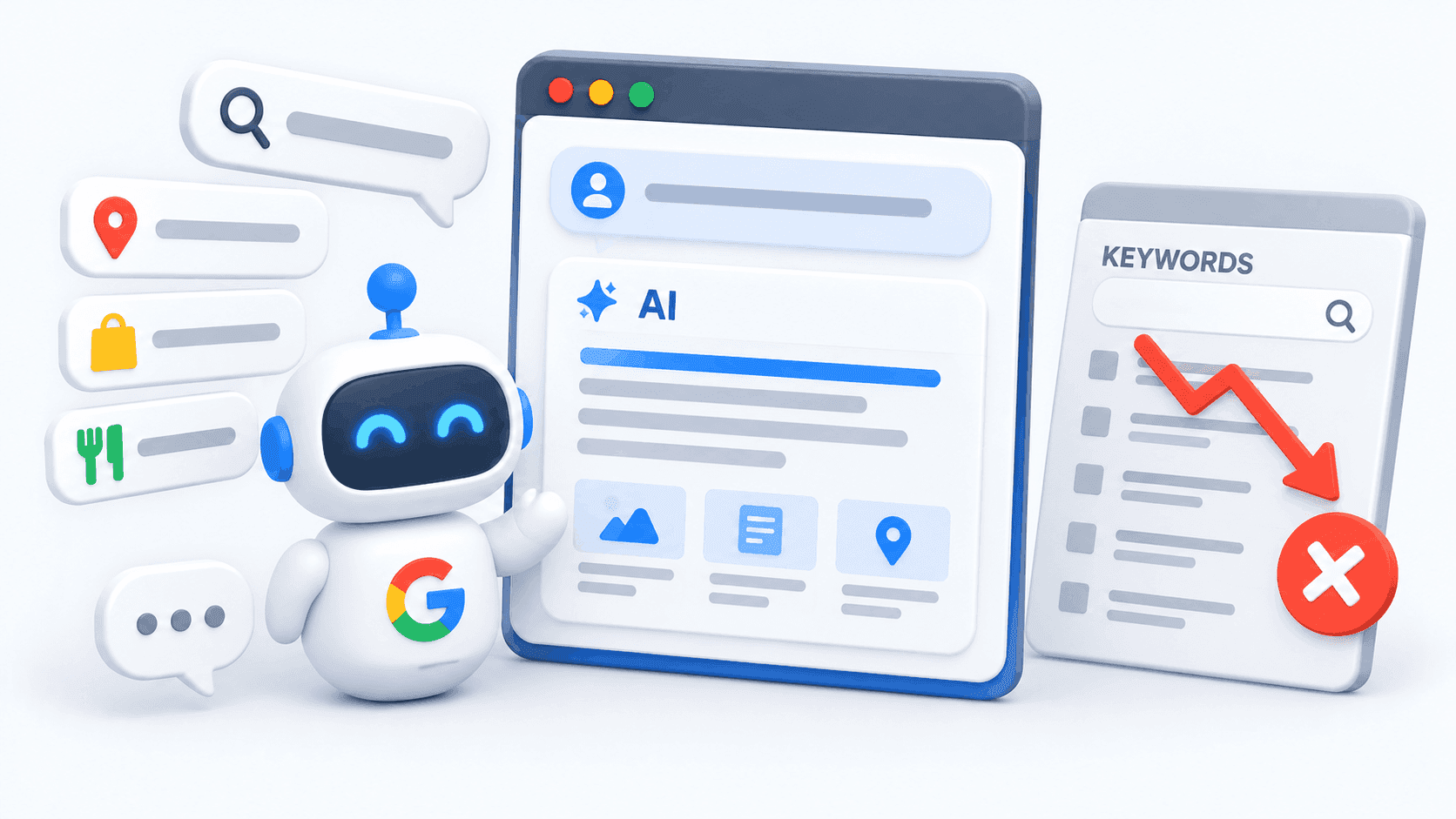
AI-generated SEO content is safe to use when it is accurate, useful, and grounded in knowledge that matters to the reader.
Google’s latest spam update did not introduce a blanket penalty for AI-written pages.
The risk comes from publishing unoriginal or mass-produced content mainly to gain rankings.
Brands can use AI for speed, but they remain responsible for the published content.
TL;DR
Google does not penalise content simply because AI was used
The risk comes from low-value, inaccurate or mass-produced pages created mainly for rankings
AI content should be reviewed, fact-checked and improved with original insight
Use AI to support the workflow, not replace editorial judgement
Publish only when the page genuinely helps the reader
Is AI-Generated Content Safe for SEO in 2026?
Google allows the appropriate use of AI, but AI-assisted pages do not receive a separate standard or automatic ranking advantage.
Google does not automatically penalise AI writing
AI can help a marketing team research a subject, organise information or prepare a first draft. None of these uses is automatically against Google’s rules.
Google’s guidance on using generative AI content says these tools can support research and help structure original content. Problems arise when businesses generate many pages without adding value for users.
This means AI-generated SEO content should be judged by what is published, not by the tool used to create it. A reviewed AI-assisted guide can be useful. A rushed article written entirely by a person can still be inaccurate, repetitive, or created mainly for search traffic.
What the June 2026 spam update changed
As of 3 August 2026, the June 2026 spam update is Google’s latest confirmed ranking update. It began on 24 June and was completed on 26 June, following the May 2026 core update, according to the Google Search Status Dashboard.
Google did not describe it as an AI-content update. The safest interpretation of the latest Google update affecting AI content is that existing spam rules continue to apply.
Brands should focus on purpose, originality, and scale rather than assuming that AI writing is now unsafe.
What Does Google’s Latest Update Actually Target?
The clearest risk is scaled content abuse: publishing many low-value pages primarily to manipulate search visibility.
Scaled content created mainly for rankings
Google’s spam policy for AI content is part of a wider policy covering any method used to produce large amounts of low-value content.
Google’s spam policies define scaled content abuse as generating many pages mainly to manipulate rankings rather than help users. The rule applies whether the pages were produced by AI, people or a combination of both.
Examples may include hundreds of near-identical location pages, articles assembled from other websites or pages created for minor variations of the same keyword.
Scale itself is not automatically wrong. A large ecommerce site may need thousands of product pages.
Those pages become useful when they contain verified specifications, accurate availability, original images and information that helps someone choose a product.
AI use and ranking manipulation are different
A brand may use AI during production and still create a useful page. Another brand may hire human writers and publish thin articles across unrelated topics simply because the keywords appear attractive.
The purpose and value of the finished page matter more than the production method.
Safer use | Riskier use |
AI prepares a draft that a specialist improves | AI produces hundreds of near-identical pages |
Factual claims are checked before publication | Content is published without meaningful review |
The brand adds examples or first-hand knowledge | The page repeats information available elsewhere |
The page answers a genuine customer question | The page exists mainly to target a keyword |
These are practical AI content quality guidelines, not a guarantee of rankings. A useful page still needs a clear structure, technical accessibility and relevance to the query.
How Does Google Assess AI-Generated Content?
Google’s published guidance focuses on helpfulness, reliability and manipulation rather than setting a public AI-content percentage.
Google does not provide a permitted AI score
There is no official rule saying that a page is safe when it contains a certain percentage of human writing. Google also does not instruct publishers to pass a third-party AI detector before publication.
An AI detector may estimate whether text resembles machine-generated writing. It cannot establish whether the article is accurate, original or useful.
Rewriting a page only to lower an AI-detection score can leave its real quality problems untouched.
Quality is judged through the finished page
Google’s people-first content guidance asks publishers to consider whether their work provides original information, demonstrates relevant knowledge, avoids merely rewriting other sources and leaves the reader satisfied.
For a marketing team, how Google assesses AI-generated content can be reduced to five questions:
Does the page answer the searcher’s actual question?
Are factual claims supported and checked?
Does the brand add experience, examples or original knowledge?
Is the author or reviewer clear about where credibility matters?
Would the page still help someone who found it outside Google?
Changing a few phrases to sound more human will not solve weak content if most answers are no.
To understand how experience, expertise and editorial accountability can strengthen AI-assisted pages, read The E-E-A-T Solution for AI-Generated Content That Ranks.
How to Use AI Content Safely Under Google’s Guidelines
A safe workflow gives AI a defined role and keeps editorial responsibility with the business.
1. Start with a real customer question
Choose a subject that your existing or intended audience genuinely needs help with.
Search volume can guide priorities, but it should not be the only reason a page exists. A software company explaining a common product problem is more useful than the same company publishing an unrelated trend article simply because the keyword has higher volume.
2. Use AI for a clear part of the process
Decide whether AI will support research, structure, summarisation or the first draft. Give it reliable source material and clear instructions rather than asking for a complete article from one short prompt.
This makes AI-generated SEO content easier to review because the team knows what the tool was expected to produce.
3. Add information that the model cannot supply reliably
The brand should contribute material that makes the page worth reading:
First-hand observations
Product or service knowledge
Real campaign examples
Original screenshots or demonstrations
Limitations, trade-offs and exceptions
A financial company could use AI to organise a draft, but a qualified specialist should verify the explanation and take responsibility for the published version.
4. Verify every factual claim
Check names, dates, statistics, quotations, product details and policy statements against reliable sources.
Review standards should be stricter for financial, medical, legal or safety-related topics. A confident sentence is not necessarily a correct one.
5. Remove generic and repetitive sections
Delete paragraphs that repeat the introduction, restate common knowledge or exist only to extend the word count.
A short page that resolves the query is more useful than a long page that makes the reader search for the answer.
For a practical quality-control process before publishing, follow The 3-Step Human Editing Process for AI Content That Ranks.
What Safe and Risky AI Content Looks Like for Brands
Short scenarios make Google’s policy easier to apply.
Scenario | Assessment | Reason |
A software company adds screenshots and specialist guidance to an AI draft | Safer | The page contains verified, first-party value |
A service business generates hundreds of city pages with almost identical wording | Risky | The pages add little local value |
A financial company has an AI draft reviewed by a qualified specialist | Safer with strict review | Accuracy and accountability are addressed |
An ecommerce brand organises verified specifications with AI and adds original testing notes | Safer | Automation structures real product information |
The common factor is editorial value. AI-generated SEO content is safer when the business can explain what it added, what it checked and how the page helps the reader.
For a closer look at the type of low-value publishing Google may treat as a quality risk, read Google’s 2025 AI Content Rules: How to Avoid the ‘Thin Content’ Trap.
What Should Brands Do Next?
Brands do not need to remove AI from their content workflow. They need a process that protects accuracy, originality and usefulness.
Use AI to reduce routine work, identify gaps and improve structure. Keep a knowledgeable person responsible for the final claims, examples and publishing decisions.
Publishing more pages is not a substitute for publishing better ones.
How No Fluff keeps content useful
At No Fluff, we use People Also Ask queries to understand what users genuinely want to know. We verify every data point, explain technical topics in simple language and focus on creating content that helps readers, not just search rankings.
We also help brands turn complex platform guidance into practical content strategies, identify where AI adds value and decide when expert input is essential.
Need marketing support? Connect with us for clear, practical guidance.
Frequently Asked Questions
1. Does Google penalise AI-generated content in 2026?
2. How does Google detect whether content was written by AI?
3. What is the difference between helpful AI content and AI spam under Google’s current policy?