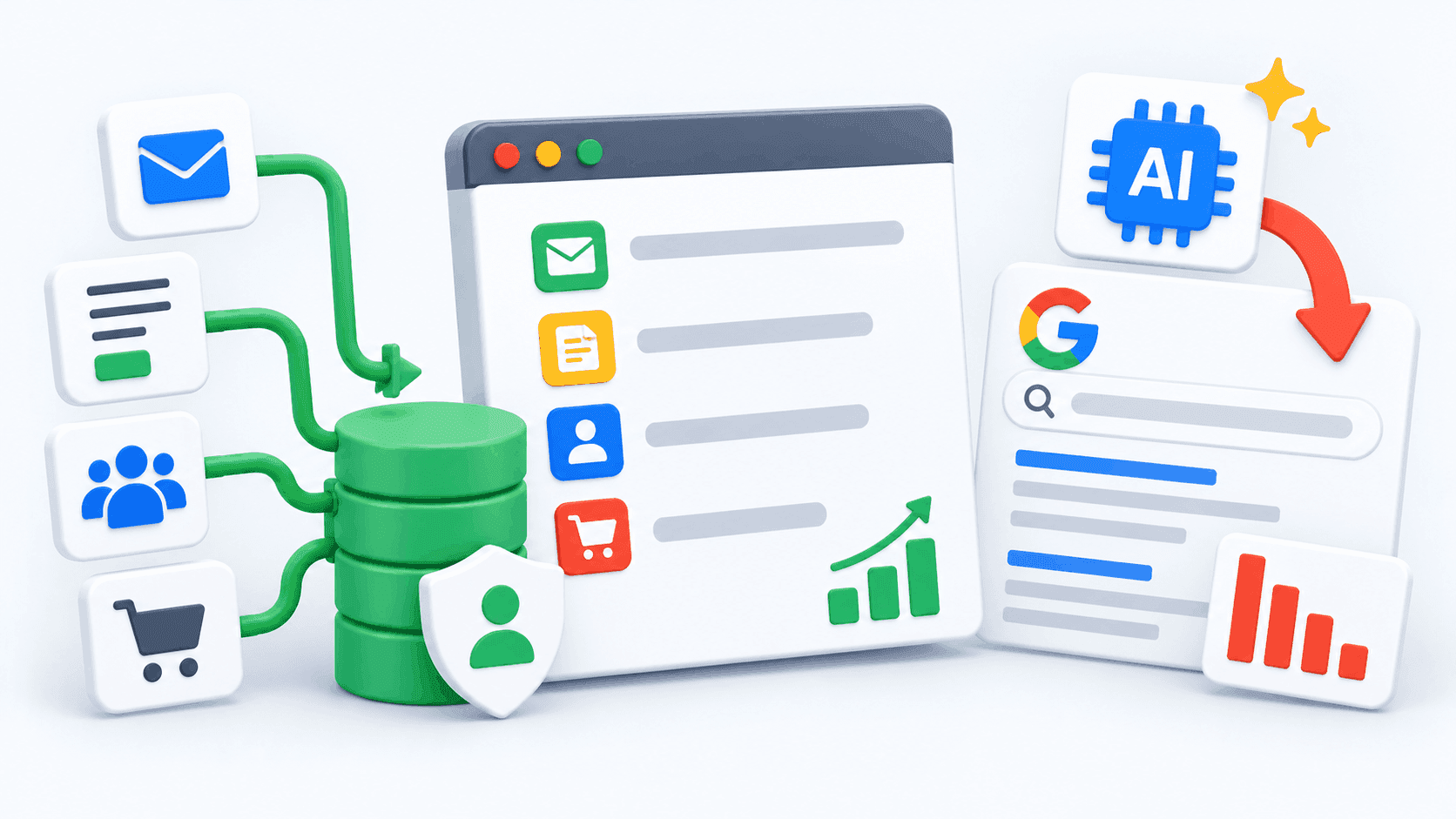
A local SEO checklist helps small businesses enhance their visibility in Google Maps and local search results.
The core objectives are to verify your Google Business Profile, maintain uniform business information, gather customer feedback, refine your local web content, and monitor your regional search performance.
For small business owners, the goal is not just ranking. It helps nearby customers find the right business, trust it quickly, and take action.
Key Takeaways
A strong local SEO setup starts with the basics: an accurate Google Business Profile, consistent business details, recent reviews and clear local website pages.
Make sure your business name, address, phone number, hours, categories and services are correct everywhere
Use real photos, review replies, and service details to show customers that your business is active and trustworthy
Build location and service pages that answer what customers actually search for before calling or visiting
Use free tools like Google Business Profile performance, Google Search Console, GA4 and GS Location Changer to track visibility from different parts of your city
Check competitors to find gaps, but do not copy them. Improve what your own business has not explained clearly enough yet
What Is A Local SEO Checklist?
A local SEO checklist gives small businesses a clear way to improve the signals Google and customers use to judge relevance, location and trust.
What local SEO means for small businesses
Local SEO helps your business appear when people search for a product, service or place near them. That could mean searches like “dentist near me,” “coffee shop in Bandra,” “real estate agent in Pune”, or “best AC repair near me.”
For small businesses, Google Maps SEO becomes integral because local search usually has high intent. The person searching is often ready to call, visit, book, compare prices or ask for directions.
Google explains that local results are mainly based on relevance, distance and prominence. Relevance means how well your profile matches the search. Distance means how close the business is to the searcher or searched location.
Prominence looks at how well-known and trusted the business appears online, including signals such as links, reviews and ratings. You can see this in Google’s guidance on improving local ranking.
Why Google Maps visibility matters
When a business appears in Google Maps, customers can act without visiting the full website first.
They can call, request directions, check hours, read reviews, view photos or compare nearby options.
That is why the query “How to show up on Google Maps in my city” is a relevant search for business owners. The answer starts with making your business easy for Google to understand and easy for customers to trust.
Common local searches include:
[service] near me
[business type] in [city]
best [service] near [area]
[product] shop open now
[professional] near [landmark]
If your profile, website and local signals are weak, Google has fewer reasons to show your business ahead of competitors.
Capture "zero-click" conversions with profile messaging
High visibility means many customers will decide without ever clicking through to your website. This is known as a zero-click conversion. To capitalise on this, small businesses should enable the Google Business Profile Messages feature.
By turning on chat, you allow mobile users to text your business directly from Google Maps.
Action item: Download the Google Maps app, turn on notifications for messages, and aim to reply within an hour. Google frequently rewards highly responsive profiles with a "Responds in a few minutes" badge, which drastically improves customer trust.
Check Your Google Business Profile First
Google Business Profile is the first place to start because it is usually the most visible local asset a small business owns.
Claim, verify and complete your profile
If you want to know how to optimise Google Business Profile for local SEO, start with the basics before touching advanced tactics.
Your Google Business Profile should include:
Correct business name
Accurate address or service area
Local phone number
Website URL
Primary business category
Secondary categories where relevant
Opening hours and special hours
Services or products
Business description
Appointment, booking or menu links wherever useful
Photos of the business, team, work, products or location
Google says businesses with complete and accurate information are more likely to show up in relevant local search results.
It also recommends keeping hours updated and verifying the business, so Google knows you are authorised to represent it.
If your profile still is not appearing properly after the basics are complete, read Local Business Not Showing on Google? A Step-by-Step Local SEO Fix.
Choose the right primary and secondary categories
Your primary category tells Google what your business mainly is. Choose the most accurate category, not the broadest one.
Business Type | Better Primary Category | Weaker Choice |
Dental clinic | Dentist | Health consultant |
Italian restaurant | Italian restaurant | Restaurant |
Real estate agency | Real estate agency | Consultant |
Salon | Hair salon | Beauty service |
AC repair company | Air conditioning repair service | Home services |
Secondary categories can help if they describe real services you offer. A dental clinic might add “cosmetic dentist” or “dental implants provider” if those services are genuinely offered.
Google’s Business Profile guidelines say categories should be as specific as possible, should describe the overall core business and should not be used only as keywords.
Avoid keyword stuffing your business name
Your business name should match your real-world name. Do not add city names, phone numbers, service keywords or taglines unless they are part of the official name.
Avoid | Better |
Sharma Dental Clinic Best Dentist In Jaipur | Sharma Dental Clinic |
Green Leaf Cafe Open 24 Hours Mumbai | Green Leaf Cafe |
Apex Realty Top Property Dealer Pune | Apex Realty |
Keyword-stuffed names may look tempting when competitors are doing it, but they can create profile quality issues.
A safer long-term approach is to keep the business name accurate and use categories, services, reviews, photos and website pages to explain what you do.
How to handle competitors who keyword stuff
While you should keep your business name clean, you will inevitably find local competitors who add fake keywords to their titles to game the system. You do not have to sit back and let them take your traffic.
Action item: Use the "Suggest an edit" tool on Google Maps to report profiles that use fake names, false locations, or stuffed keywords. Select "Change name or other details" and enter their actual legal business name. Clean up fraudulent listings in your local radius to immediately clear a path for your own rankings.
Build Location Signals Google Can Trust
Your business details should tell the same story wherever Google and customers find you.
Keep name, address and phone details consistent
A local SEO checklist for small business owners should always include a basic NAP audit. NAP means name, address and phone number.
Check that the same details appear on:
Google Business Profile
Website footer
Contact page
Location pages
Social media profiles
Major directories
Appointment platforms
Delivery or marketplace listings
Industry-specific directories
Small differences can confuse customers. Larger discrepancies, such as an outdated address or an incorrect phone number, can erode trust and waste leads.
For service businesses, consistency is still important even if you hide your residential address on Google. Your website should clearly explain the cities, neighbourhoods or regions you serve.
Add service areas without misleading customers
A service-area business visits customers instead of serving them at a storefront. Plumbers, electricians, cleaning companies, pest control firms, mobile repair providers and some healthcare or home service businesses often fall into this group.
Use service areas honestly. Do not add every nearby city just to appear everywhere. If you cannot realistically serve a location, do not list it.
The same principle applies to hybrid businesses. If customers can visit your location and you also travel to customers, make both parts clear. Do not make the profile look like a storefront if there is no staffed location customers can visit.
Fix duplicate or outdated listings
Duplicate profiles and outdated listings can split trust signals and confuse customers. Search your business name, old addresses, old phone numbers and previous brand names.
Look for:
Old Google profiles
Duplicate Maps listings
Closed locations still showing as open
Wrong pins on Maps
Directory listings with old phone numbers
Social profiles with outdated addresses
Franchise or practitioner profiles that conflict with the main business
Do this before investing in new content. A clean local footprint gives the rest of your work a better foundation.
Build ultra-local links that national brands cannot copy
While traditional SEO relies on getting links from high-authority global websites, local SEO thrives on geographic relevance. Google looks for digital footprints that prove your business is genuinely rooted in the community.
Build local relevance by sponsoring a local youth sports team, joining your local Chamber of Commerce, or getting featured by a neighbourhood blogger. Even if these local websites have low authority metrics globally, their hyper-local context signals to Google that you are a trusted fixture in that specific town or city.
For a wider technical audit of your site and local visibility basics, use Technical SEO Checklist for Small Businesses: Fix These 15 Errors to Improve Your Google Rankings.
Improve Reviews, Photos, and Profile Activity
Reviews, photos and regular profile activity help customers compare local businesses faster.
Ask for reviews consistently
Reviews should not be treated as a once-a-year campaign. Build review requests into your normal customer process.
Good moments to ask include:
After a completed appointment
After a successful delivery
After a customer praises your service
After a repeat purchase
After a project handover
After a positive support interaction
Keep the request simple. Send the review link, thank the customer and avoid pressure. Do not offer rewards for positive reviews.
A steady review process usually works better than asking for reviews only when rankings drop. It also gives future customers more recent proof that the business is active.
Respond to reviews with useful details
Replying to reviews shows that the business is active and paying attention. It also helps future customers understand the service experience.
A useful reply is specific but not awkward. For example:
“Thank you for visiting our Indiranagar clinic. We’re glad the appointment process and dental cleaning were smooth for you.”
That is better than a generic “Thanks for your feedback.”
For negative reviews, stay calm. Acknowledge the issue, explain the next step if appropriate and invite the customer to contact the business privately. Do not argue in public.
This is one of the most practical Local SEO tips for small businesses to get more customers because reviews affect both ranking signals and customer confidence.
Add photos that prove the business is real
Photos help customers see whether your business looks active, credible and relevant to their needs.
Useful photo ideas by business type:
Business Type | Photos To Add |
Restaurant | Exterior, interior, menu items, seating, kitchen hygiene, team |
Clinic | Reception, treatment rooms, equipment, doctors, accessibility |
Retail store | Storefront, shelves, popular products, parking, billing area |
Service business | Team, vehicles, tools, before-and-after work, completed projects |
Real estate firm | Office, team, property visits, neighbourhood visuals, client meetings |
Do not upload stock images. Real photos reduce doubt because customers can see the place, people, products, and work behind the listing.
Optimise Your Website For Local Search
Google Maps visibility is supported by your website, especially when the site confirms your services, locations and credibility.
Create clear service and location pages
To rank on Google Maps for a local business, your website needs pages that clearly support what your Google Business Profile claims.
A useful local page should answer:
What do you offer?
Where do you offer it?
Who do you serve?
What makes the business credible?
How can someone contact or visit you?
A clinic may need a main location page and separate service pages for dental implants, braces or cosmetic dentistry.
A real estate firm may need pages for specific cities, property types or buyer needs. A restaurant may need menu, location, delivery, reservation and event pages.
Avoid making thin city pages that only swap the location name. Each local page should include useful details that a real customer would care about.
Add local details that customers actually search for
Local pages become stronger when they include details specific to that city, neighbourhood or service area.
Add details such as:
Address and directions
Nearby landmarks
Parking availability
Service areas
Opening hours
Emergency availability
Delivery radius
Appointment process
Local pricing factors
Product availability
Photos from the actual location
Testimonials from local customers
These details make the page more useful for customers and clearer for search engines.
To improve the local pages that support your Google Business Profile, read On-Page SEO Checklist for Blog Posts: 20 Simple Tweaks That Double Your Organic Traffic.
Use LocalBusiness structured data
LocalBusiness structured data is code that helps mark up business details in a structured format. It does not replace good content, but it can help Google understand important details such as business hours, departments, reviews, and location information.
Google Search Central says LocalBusiness structured data can be used to tell Google about business hours, different departments within a business, reviews where relevant and more.
It also recommends using the most specific LocalBusiness subtype possible, such as Restaurant, DaySpa or HealthClub.
For small businesses, the basics usually include:
Business name
Address
Phone number
Opening hours
Website URL
Business type
Geo coordinates where appropriate
Ask your developer or SEO team to add and test it properly. Badly structured data is not useful.
Create Local Content That Matches Search Intent
Local content should answer real customer questions, not just repeat city names.
Answer city-specific customer questions
To improve local visibility, create content around the questions people ask before they call or visit.
Business Type | Local Content Ideas |
Clinic | “How much does teeth whitening cost in [city]?” |
Restaurant | “Best private dining options for small groups in [area]” |
Retailer | “Where to buy [product] near [neighbourhood]” |
Real estate firm | “Best areas to rent a 2BHK in [city]” |
Home service business | “How to choose a pest control company in [area]” |
To beat competitors on Google Maps, look for gaps in their reviews, categories, photos, service pages and local proof.
Look at what higher-ranking competitors explain poorly, then create clearer, more helpful pages around those gaps.
Add proof from real local work
Google and customers both need proof that your business is active in the area.
Useful proof includes:
Local case studies
Project pages
Customer stories
Before-and-after work
Event participation
Local partnerships
Press mentions
Neighbourhood-specific testimonials
Photos from real jobs or visits
A real estate firm can show neighbourhood guides and client success stories. A clinic can explain common local patient questions. A restaurant can highlight events, catering and seasonal menus. A service business can show completed work in specific areas.
Keep it honest and useful. Local content should help a customer make a decision.
Use Free Tools To Check Local Visibility
Free tools can help small business owners see whether local SEO work is improving visibility, traffic and customer actions.
1. Google Business Profile performance
Your Google Business Profile gives useful performance signals. Track:
Calls
Website clicks
Direction requests
Booking clicks
Search terms
Profile views
Customer actions
Do not check rankings alone. A business may get more calls and direction requests even when rankings move slowly.
Track these numbers monthly and compare them with profile updates, review activity, website changes and seasonal demand.
2. Google Search Console and Google Analytics 4
Google Search Console helps you see how your website appears in search. For local SEO, review:
Queries containing city or neighbourhood names
Service keywords
Pages getting impressions, but few clicks
Pages with indexing issues
Mobile usability issues where relevant
Google Analytics 4 helps you see what visitors do after they arrive. Track whether local visitors call, submit forms, request directions, book appointments or visit key pages.
Together, these tools show whether visibility is turning into useful action.
3. GS Location Changer for local rank checks
Local rankings can change depending on where the searcher is. A restaurant may rank differently from one neighbourhood to another.
A clinic may appear near its own area but not across the city. A real estate firm may rank for one locality but not another.
The GS Location Changer is a free Chrome and Firefox extension that lets users change the location of Google Search to see localised search results from an exact location.
A simple monthly workflow:
Choose your country and language
Enter the city, neighbourhood or area you want to check
Search important terms such as “[service] near me” or “[service] in [city]”
Note which businesses appear in the local pack
Compare their categories, reviews, photos, website pages and offers
Repeat the same checks each month
This gives you a more realistic view than searching only from your own phone or office.
If you want your content to appear beyond classic search results, read AI Search Visibility Checklist: How to Optimise Your Content to Appear in ChatGPT and Gemini Answers.
Track Competitors Without Copying Them
Competitor tracking should help you find local gaps, not turn your business into a weaker version of someone else’s.
Compare categories, reviews, photos and service pages
Search your main keywords from different parts of the city. Note which competitors appear repeatedly.
Compare:
Area To Check | What To Look For |
Categories | Are they using a more specific primary category? |
Reviews | Do they have more recent reviews? |
Review replies | Are they responding clearly and consistently? |
Photos | Do they show real work, premises, people or products? |
Services | Are their GBP services more complete? |
Website pages | Do they have stronger local or service pages? |
Local proof | Do they show case studies, testimonials or area-specific work? |
Do not copy their business name, reviews, photos or content. Use the comparison to spot what your business has not explained well enough yet.
Find gaps you can realistically close
Small businesses often lose visibility because of simple gaps:
Missing services on Google Business Profile
Weak or outdated photos
Few recent reviews
No location page
Thin service pages
Incorrect hours
Inconsistent phone number
No local proof on the website
No tracking process
Duplicate listings
Fix the gaps that affect customers first. If a customer cannot understand your service, trust your reviews or contact you easily, rankings alone will not solve the problem.
Final Thoughts
A local SEO checklist keeps your business focused on the basics that affect visibility and customer action.
Start with your Google Business Profile. Make sure the business name, address, phone number, hours, services, categories and photos are correct. Then improve reviews, strengthen local website pages, clean up listings, add structured data where useful and track visibility from different city locations.
The businesses that win locally are usually the ones that stay accurate, active and easy to trust.
If your business is not showing up where local customers are searching, No Fluff can help you build a clearer local SEO system.
Connect with No Fluff to improve your Google Maps visibility, strengthen your local search presence and help more customers find your business in your city.
Frequently Asked Questions
1. How can higher rankings on Google Maps be achieved?
2. Does website optimisation affect Google Maps rankings?
3. Are reviews important for local SEO rankings?